

Squeaky dog toys can be suitable for supervised play when they are correctly sized, intact and a good match for how your dog plays. The main physical risks are a detached squeaker, swallowed fabric or rubber, and a toy small enough to lodge in the mouth or throat.
A dog that carries a toy gently needs different supervision from one that pulls at seams or bites straight through the casing. If your dog repeatedly opens toys to reach the squeaker, stop using that toy rather than waiting for a piece to disappear.
Has your dog swallowed a squeaker? Contact your vet promptly, even if your dog seems well. Breathing difficulty or collapse needs emergency care. See what to do after a squeaker is swallowed below.
Check These Five Places Before Play
Inspect the toy with your dog out of reach. The AKC warns that a detached squeaker can cause choking or an intestinal blockage. Use these checks before each session and repeat them afterwards:
| Where to look | What to check | When to stop play |
|---|---|---|
| Seams and joins | Look around stitched edges, glued joints and the squeaker opening. | Stop if a seam is opening, a join is separating or a plug is loose. |
| Squeaker casing | Look for a new hole or a squeaker working out of its seat. Do not pull the toy apart to inspect it. | Stop if the squeaker is exposed, reachable or partly detached. |
| Ears, tails and trim | Check small projections and decorations for cuts or loose attachments. | Stop if a part is hanging by threads or can break away. |
| Outer surface | Check for punctures, thinning, cracks, loose strands and emerging stuffing. | Remove damaged toys; do not rely on the squeaker still working. |
| Size and shape | Consider the whole toy and any section your dog can bite off. | Stop if it can lodge in the mouth or has worn down to a swallowable size. |
If the squeak changes or stops: take the toy away and inspect it. Silence alone does not prove that a squeaker has been swallowed, but a missing part needs prompt veterinary advice. Do not cut open or puncture the toy to silence it, or return a torn toy after simply removing its squeaker.
Why Do Dogs Love Squeaky Toys?
For some dogs, the sound makes chasing, biting and carrying a toy rewarding. The AKC describes how toy preferences can relate to hunting behaviour, but dogs vary: some enjoy squeaking, some carry toys quietly, and others avoid the noise.
Watch the play rather than assuming every dog enjoys the sound. Pause if your dog backs away or becomes distressed. Repeatedly digging at one spot to extract the squeaker is a reason to end the session, even if the rest of the toy looks intact.
Two Squeaky Toys for Supervised Play
A squeaker does not automatically make a toy unsafe. The important questions are how easily the outer toy can be opened, whether the squeaker can be reached, and how quickly your dog tends to dismantle soft or latex toys.
The reinforced bear suits dogs that carry and mouth soft toys, while the latex egg provides a lightweight option for gentle fetch and squeaking. Neither should be left with a determined chewer; remove the toy immediately if seams, latex, stuffing or the squeaker become exposed.

KONG Wild Knots Bear
This soft squeaky bear has a knotted rope skeleton and minimal stuffing, giving dogs that enjoy carrying plush toys a more reinforced supervised option.
- Best for: Gentle mouthing, carrying and interactive play
- Construction: Knotted internal rope with a plush outer layer
- Stuffing: Uses less stuffing than a conventional plush toy
- Important: Remove it immediately if seams open or the squeaker becomes reachable
EcoFurball may earn a small commission if you buy through this link, at no extra cost to you.
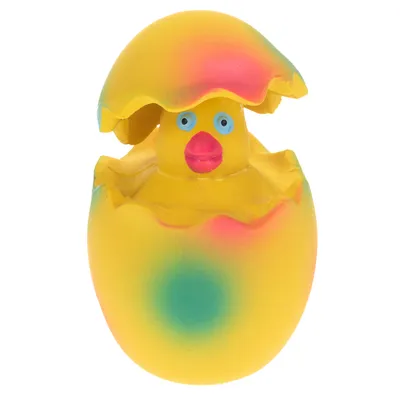
Latex Squeaker Egg with Chicken Surprise
This small latex egg squeaks and reveals a chicken shape when squeezed, making it a lively option for gentle indoor fetch and closely supervised play.
- Best for: Small dogs that play gently with squeaky toys
- Material: Flexible latex
- Play style: Squeaking and light fetch rather than sustained chewing
- Important: Not suitable for destructive chewers; discard it if the latex tears or the squeaker loosens
EcoFurball may earn a small commission if you buy through this link, at no extra cost to you.
Are Squeaky Toys Dangerous for Dogs?
A squeaker adds a small component that may become accessible when the surrounding toy fails. Fabric, stuffing, detached rubber and the whole toy can also cause harm. An intact-looking body does not rule out a loose plug, damaged seam or a section small enough to swallow.
Choking and a digestive blockage are different problems. A piece can obstruct the airway immediately, or be swallowed and become stuck farther along the digestive tract. A dog breathing normally after swallowing a part still needs veterinary advice.
Biggest Risks of Squeaky Dog Toys
Swallowed Squeakers
A squeaker can become a separate foreign object when its casing or attachment fails.
Many squeaky toys contain small plastic inserts that can become exposed once the outer layer tears.
If swallowed, squeakers may:
- Cause choking
- Become stuck in the stomach
- Create intestinal blockages
- Require emergency surgery
Risk depends on the size and shape of the part relative to the dog, and whether the dog tries to swallow it. Large dogs can swallow toy parts too.

Torn Plush Fabric and Stuffing
Many squeaky toys are also plush toys.
Once ripped open, dogs may ingest:
- Fabric strands
- Polyester stuffing
- Loose threads
For the risks from the fabric and filling around a squeaker, see our guide to polyester dog toy safety.
Soft plush squeaky toys may seem harmless at first, but they often fail quickly under heavy chewing.
Broken Plastic Pieces
Some squeaky toys contain hard plastic sections or thin molded materials.
Damaged or brittle toy components can:
- Crack
- Splinter
- Break into sharp pieces
Our plastic dog toy safety guide explains how material, hardness and breakage affect risk.
Price alone cannot tell you how a toy will break. Check its actual construction and condition. For questions about recycled plastics and reclaimed fibres, see our recycled pet toy safety guide.
Choking Hazards
A toy may look mostly intact while a small attachment works loose. Check the edges and attachments as carefully as the main body.
Dangerous parts include:
- Detached squeakers
- Small ears or tails
- Rubber chunks
- Rope strands
- Broken plastic fragments
Any toy small enough to fully fit in your dog’s mouth carries additional risk.
Are Squeaky Toys Safe for Aggressive Chewers?
If your dog opens the casing or reaches the squeaker, that toy is unsuitable for continued play. Supervision does not make a toy safe when the dog can dismantle it faster than you can intervene.
Aggressive chewers tend to:
- Target seams
- Crush squeakers
- Rip fabric rapidly
- Destroy toys in minutes
A fetch or carrying toy should not become a prolonged chewing session. End play when your dog starts picking at seams, tearing fabric or crushing the squeaker housing.
If your dog destroys toys regularly, it’s worth reading safest dog toys for aggressive chewers before choosing softer squeaky products.
In many cases, durable rubber toys are a safer option than plush squeaky toys because they:
- Compress instead of splintering
- Resist tearing
- Avoid exposed stuffing
That’s one reason durable rubber products are frequently recommended in are rubber dog toys safe.
Are Rubber Squeaky Toys Safer?
Often, yes.
Rubber squeaky toys are generally safer than plush squeaky toys because they:
- Last longer
- Resist tearing
- Reduce exposed stuffing risks
- Usually fail more slowly
However, quality still matters. Many squeaky toys marketed as “rubber” are actually made from TPR (thermoplastic rubber), a softer synthetic material designed to mimic the flexibility of rubber while remaining lightweight and affordable. TPR can work well for puppies and moderate chewers, but it may wear out more quickly than natural rubber under heavy chewing. If you’re comparing common squeaky toy materials, our guide to are TPR dog toys safe explains when TPR is a good choice and when more durable options may be safer.
Some manufacturers also use nylon in squeaky chew toys to improve durability, but greater hardness introduces a different safety consideration. Our guide to are nylon dog toys safe explains how very hard nylon toys compare with rubber and TPR, why they can increase the risk of tooth fractures, and which dogs are better suited to more flexible materials.
Low-quality rubber or thin materials can still:
- Crack
- Break apart
- Create swallowable pieces
Look for:
- Thick rubber walls
- Reputable brands
- Size-appropriate toys
- Flexible materials rather than brittle plastics
What Toys Do Vets Recommend Instead?
Most vets recommend durable, size-appropriate toys that:
- Flex slightly under pressure
- Resist splintering
- Do not contain easily detached pieces
Common recommendations include:
- Durable rubber chew toys
- Food-dispensing toys
- Reinforced rubber squeaky toys
- Supervised enrichment toys

For dogs that prefer to gnaw rather than chase or squeak their toys, hard chews are another option, but they need a different kind of supervision. Nylabones and similar nylon chews can last considerably longer than plush toys, but owners need to watch for excessive wear, pieces breaking away and dogs biting down hard enough to damage a tooth.
Some dogs may also be better suited to edible chews than squeaky toys. Our guide to safe natural dog chews compares rabbit ears, beef tendons, fish skin chews, bully sticks, yak chews, antlers, and bones, including which options are more digestible and which may be too hard for teeth.
If you’re unsure which option is best for your dog, our guide to the safest non-toxic dog toys compares the most reliable materials, explains what to avoid, and helps you choose toys that match your dog’s chewing style without increasing the risk of injury.
For a general veterinary reference on toy safety, Texas A&M University’s College of Veterinary Medicine advises owners to regularly inspect dog toys for damage and remove toys that could become choking or intestinal blockage hazards.
How to Use Squeaky Toys More Safely
Use the inspection checklist above each time, then watch what happens during play. A toy that survived yesterday may already have a weak point today.
Stay Close Enough to Intervene
Keep squeaky play supervised and put the toy away afterwards, especially if your dog has a history of swallowing parts. Supervision means watching the dog rather than being elsewhere in the house. Practise exchanging the toy for a reward so that ending play does not become a chase.
Stop at the First Sign of Damage
Remove toys with open seams, exposed stuffing, loose squeakers, cracks or missing pieces. Do not give a damaged toy back while you decide whether to replace it. Washing or sewing a hole does not establish that the internal squeaker is still secure.
Check the Size as Your Puppy Grows
A toy that fitted a puppy may become too small as its mouth grows. Recheck the size and condition regularly, and follow the maker’s age and use guidance. Carrying a toy gently once does not establish that it will remain suitable for chewing.
Clean and Store It as Directed
Follow the toy’s washing instructions and inspect it again after cleaning. Store it out of reach when play ends. Rotating intact toys can maintain interest, but rotation cannot repair damage or prevent a determined dog from reaching a squeaker.
What Toys Should You Avoid?
Be cautious with:
- Thin plush toys
- Cheap plastic squeaky toys
- Toys with glued decorations
- Toys with exposed seams
- Small squeakers
- Weak stitching
You should also supervise toys that combine squeakers with rope materials, since frayed rope can create additional ingestion risks discussed in are rope dog toys safe.
If your dog swallows rope strands from a damaged toy, contact a vet for advice rather than waiting for symptoms. Our guide to what happens if a dog eats rope explains the warning signs, how rope can cause a linear foreign body, and why visible rope should never be pulled from the mouth or rear.
Material choice makes a big difference too. Our guide to hemp dog toys vs cotton explains why hemp rope toys usually last longer, fray less aggressively, and hold up better for regular chewing and tug play. Many cat owners are now looking for similarly low-plastic enrichment options that avoid synthetic stuffing and brittle materials altogether. Our guide to compostable cat toys explains which natural materials provide safer, lower-waste alternatives for everyday feline play.
What to Do If Your Dog Swallows a Squeaker
Call your vet promptly after known or suspected ingestion; do not wait for symptoms. Take away the remaining toy, note when it happened and keep the packaging or a photo of the missing part. Tell the vet your dog’s size and whether fabric, stuffing or other pieces may also be missing.
If your dog is struggling to breathe, choking or collapsing, seek emergency veterinary help immediately. VCA lists vomiting, abdominal pain, reduced appetite, lethargy and straining to pass stool among signs of a swallowed foreign body. These signs need urgent attention, but their absence does not rule out a problem.
PDSA advises against making a dog vomit unless a vet specifically instructs you. A vet should decide whether observation, imaging or removal is appropriate; there is no reliable home rule for which squeakers will pass safely.
Keep Play Enjoyable and Stop Before Parts Come Loose
The useful question is whether your dog can reach, detach or swallow any part of this toy. Check the joins, squeaker opening and outer layer, watch how your dog handles it, and stop at the first sign of damage. A working squeak is not proof that the toy is still intact.
Squeaky Dog Toy Safety FAQs
Are squeaky toys bad for dogs?
Not necessarily. Many dogs safely enjoy squeaky toys during supervised play. Problems usually happen when toys become damaged or dogs swallow squeakers or broken pieces.
Can dogs choke on squeakers?
Yes. A detached squeaker can lodge in the mouth or throat, or cause a blockage after it is swallowed. Contact your vet promptly if a squeaker is missing and your dog may have swallowed it.
What toys are unsafe for dogs?
Toys that splinter, crack, expose stuffing, or break into small pieces can become dangerous. Thin plastic toys and weak plush toys are common examples.
What chew toys are safe to leave alone with?
Durable rubber toys are generally among the safest options for unsupervised chewing, although all toys should still be inspected regularly for damage.
What do vets recommend for dogs to chew on?
Vets commonly recommend durable rubber chew toys, food puzzle toys, and size-appropriate chew products that are flexible rather than extremely hard.
Are squeaky dog toys safe for puppies?
They can be suitable for supervised play if the toy fits the puppy’s size and intended use. Check seams, attachments and the squeaker opening before each session, and reassess the size as your puppy grows. Remove it if the puppy starts tearing it apart.
Is a squeaky toy safe if it stops squeaking?
Stop play and inspect it. A silent squeaker may have stopped working, but it may also have moved or become detached. Do not return a damaged toy to your dog. If a part is missing and may have been swallowed, contact your vet.
Can a dog pass a swallowed squeaker?
Some swallowed objects pass, but a squeaker can become stuck. Its size and shape and your dog’s size affect the risk. Call your vet rather than waiting to see, and do not make your dog vomit unless the vet tells you to.

Safe Chew Toys for Puppies: Age, Size & Supervision
Puppy chew-toy guidance reviewed 9 October 2026 Safe chew toys…

Are Plush Dog Toys Safe? Stuffing, Seams & Swallowed Parts
Plush dog toy safety guidance reviewed 9 October 2026 Are…

Safe Dog Bones: Are Any Bones Actually Safe for Dogs?
Dog-bone safety guidance reviewed 9 October 2026 If you are…